
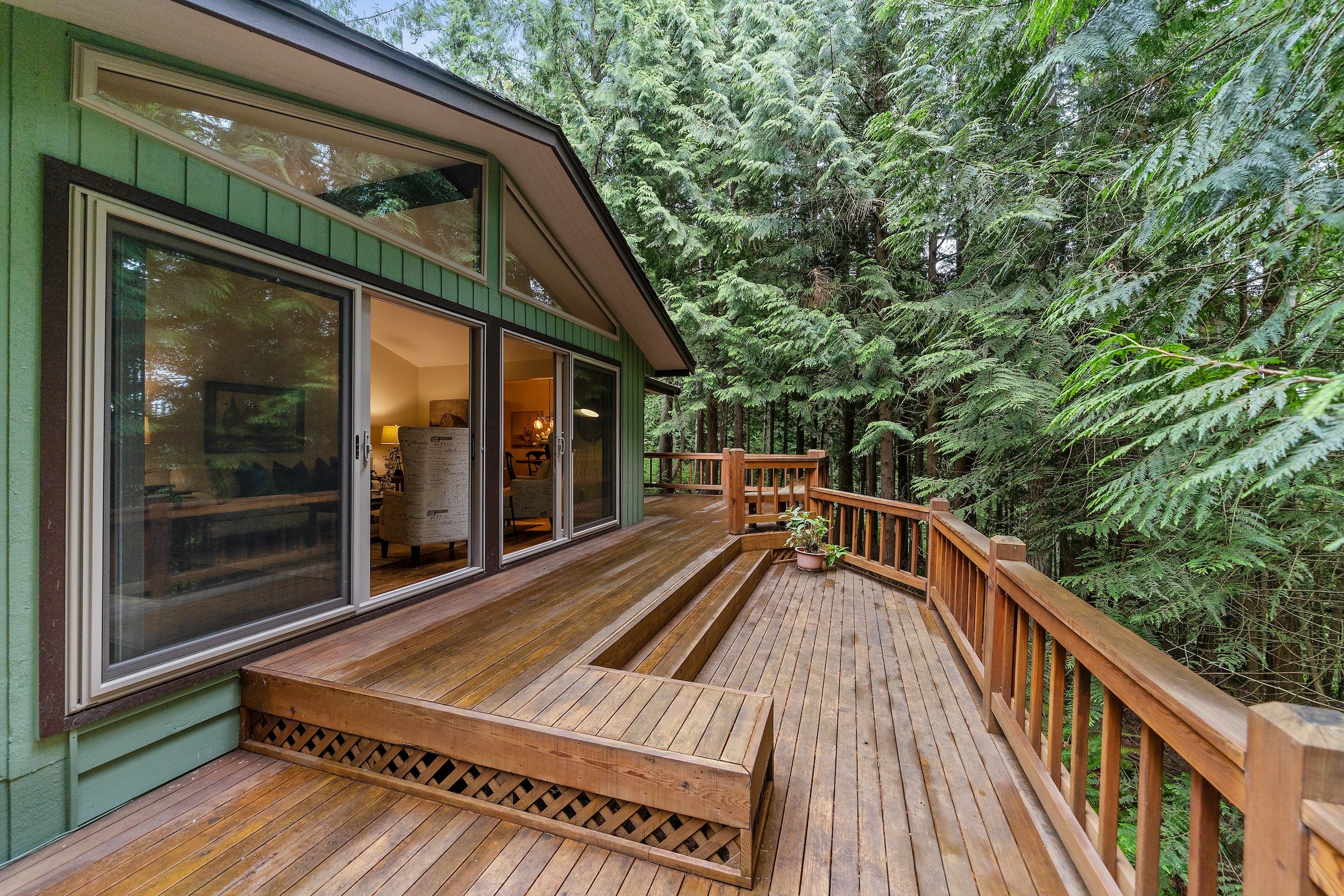
Deck Restoration

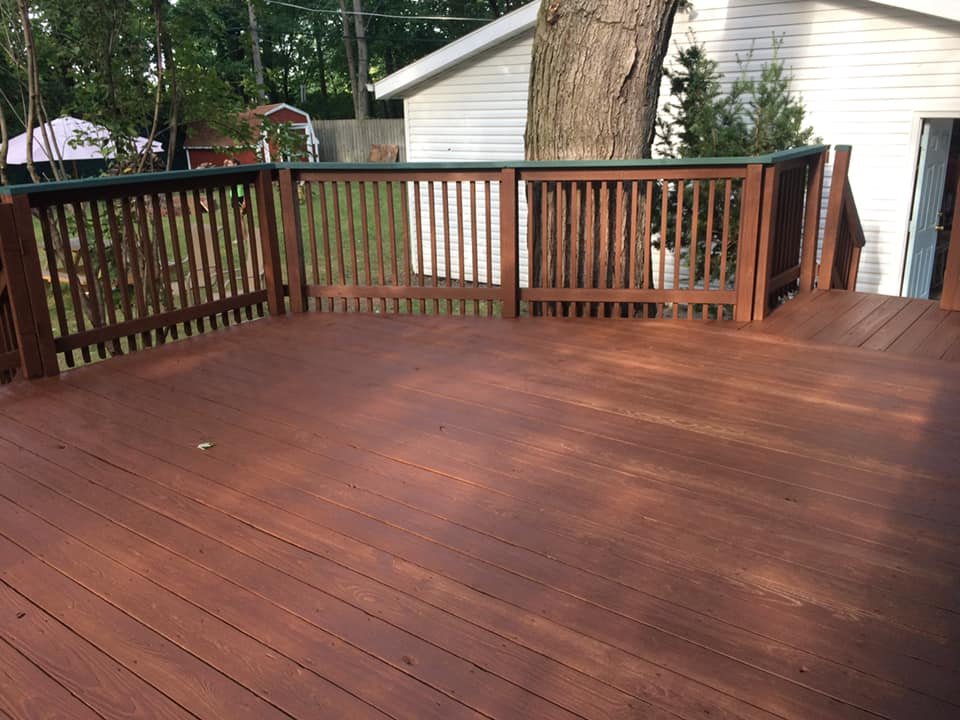
Expert Deck Restoration
It doesn’t matter if you’ve got a composite, vinyl or wood deck, you’ll encounter an identical set of problems. Although composite decks will require less maintenance – dirt, algae, and mold will still build-up, giving your deck a dull, faded appearance. And unfortunately, the same will happen to your beautiful wood deck. To revitalize your deck, we use our low-pressure techniques and our powerful cleaner specifically designed and intended to safely clean composite and vinyl surfaces of the toughest stains.
Refinishing
Deck refinishing is an important part of maintaining the appearance and structural integrity of your deck. Over time, decks can become faded, weathered, and worn, making them less attractive and less safe to use. Refinishing your deck can help restore its beauty and protect it from further damage.
The first step in deck refinishing is cleaning the surface thoroughly. This process is similar to deck restoration, which involves removing any dirt, grime, or mildew that may have accumulated on the deck. Depending on the condition of your deck, power washing may be necessary to remove stubborn stains and debris. This will help ensure that the surface is clean and ready for refinishing.
After cleaning, if necessary, power sanding can be done to remove any rough patches or splinters on the surface. This will help create a smooth and even surface for the application of the stain and sealant.
The next step is the application of a professional-grade stain and sealant. This is an important step in protecting your deck from future damage caused by moisture, UV rays, and other environmental factors. The stain and sealant will penetrate deep into the wood, providing long-lasting protection and enhancing the natural beauty of the wood.
It's important to choose a high-quality stain and sealant that is designed specifically for outdoor use. A professional-grade product will provide superior protection and a longer lifespan than a lower quality product. The type of stain you choose will depend on the look you want to achieve and the type of wood your deck is made of. Some stains provide a more natural look, while others offer more vibrant color options.
Overall, deck refinishing is an essential part of maintaining the beauty and safety of your outdoor space. By following a thorough cleaning process and applying a professional-grade stain and sealant, you can protect your deck from future damage and enjoy its beauty for years to come.
Residential Cleaning Services
Because the size and details of each job changes with each surface, we cannot give prices on this site. Please call today for your free estimate or check out what specials we are currently running!
Read Our Amazing Reviews!
Contact us.
F.A.Q.
-
Every 2–3 years for most stains; semi-transparent stains on horizontal boards usually need refreshing every 1–3 years, and solid stains every 4–5. In Northeast Ohio, freeze-thaw cycles, snow load, and intense summer UV push reapplication toward the shorter end. The simple test: sprinkle water on the boards — if it soaks in instead of beading, it's time.
-
Yes — but only with the right pressure, tip, distance, and technique. Wood decks should be cleaned at no more than ~800–1,200 PSI with a 30–40° fan tip held 8–12 inches off the boards and moved with the grain. Too close, too narrow, or too long in one spot causes "tiger striping," fuzzing, and splintering. Wet Jet uses low-pressure soft-wash techniques and a deck-specific cleaner — most lifting is done by the chemistry, not the wand.
-
Sealers are clear and protect against moisture but offer little UV defense — wood underneath still grays. Stains contain pigment, which both colors the wood and blocks UV, so they last longer on horizontal surfaces and look better season after season. Most modern products are stain-and-sealer combos. For full-sun Northeast Ohio decks, we almost always recommend a pigmented stain over a clear sealer.
-
48–72 hours is the industry standard. Wood needs to drop below ~15% moisture before stain will absorb evenly; staining damp boards causes peeling, blotching, and mildew trapped under the finish. In Northeast Ohio's humid summers, plan on 72 hours after a wash; in dry, breezy spring weather, 48 is usually enough. The bead test works: drop water on the boards — if it beads, wait longer; if it soaks in within seconds, you're ready.
-
Late spring through early fall, with daytime temperatures consistently between 50°F and 90°F and no rain forecast for 24–48 hours. In Northeast Ohio, that's roughly mid-May through mid-June and again in September — warm enough for the stain to cure properly, before the worst summer heat and humidity, and well clear of the first hard frost. Schedules fill fast in those windows, so book early.
-
Clear sealers last 1–2 years. Semi-transparent stains last 2–3 years on horizontal surfaces (deck floor, steps) and 4–6 years on vertical surfaces (railings, posts). Solid-color stains can last 4–5 years on the deck floor and longer on rails. The biggest factor is pigment — more color equals more UV protection equals longer life. Northeast Ohio winters typically shave a year off published averages.
-
Usually yes for wood decks — even after a thorough wash. Sanding opens the wood grain so stain absorbs evenly, knocks down splinters and fuzzed-up fibers from years of weathering, and removes any glossy spots where old stain hasn't fully broken down. We typically use 60–80 grit on a power sander for the floor and a finer grit on rails. Composite decks don't need sanding.
-
A soft-wash treatment kills algae, mold, and mildew at the root rather than just blasting the surface. We apply a deck-safe cleaner (sodium percarbonate-based for wood, a milder soap-based mix for composite), let it dwell, then rinse with low pressure. Skip the household bleach — it discolors wood, corrodes metal fasteners, and doesn't kill spores, so the green is back within weeks.
-
Graying is UV breaking down the lignin in your wood — totally natural, but it means the surface is unprotected. The good news: it's almost always cosmetic. A wood brightener (oxalic acid) wash followed by sanding and a fresh pigmented stain restores the original color and adds 2–3 years of protection. We do this restore-from-gray sequence on a lot of Northeast Ohio decks every spring.
-
For most wood decks, stain. Paint sits on top of the wood as a film — it looks great year one, but freeze-thaw and foot traffic cause it to chip, crack, and peel, and stripping failed paint is a much bigger job than refreshing stain. Stain penetrates the wood, fades gradually rather than peeling, and recoats cleanly. We only recommend paint when a deck is too far gone for stain to look right and the homeowner wants a uniform color.