Pressure Washing

Expert Pressure Washing
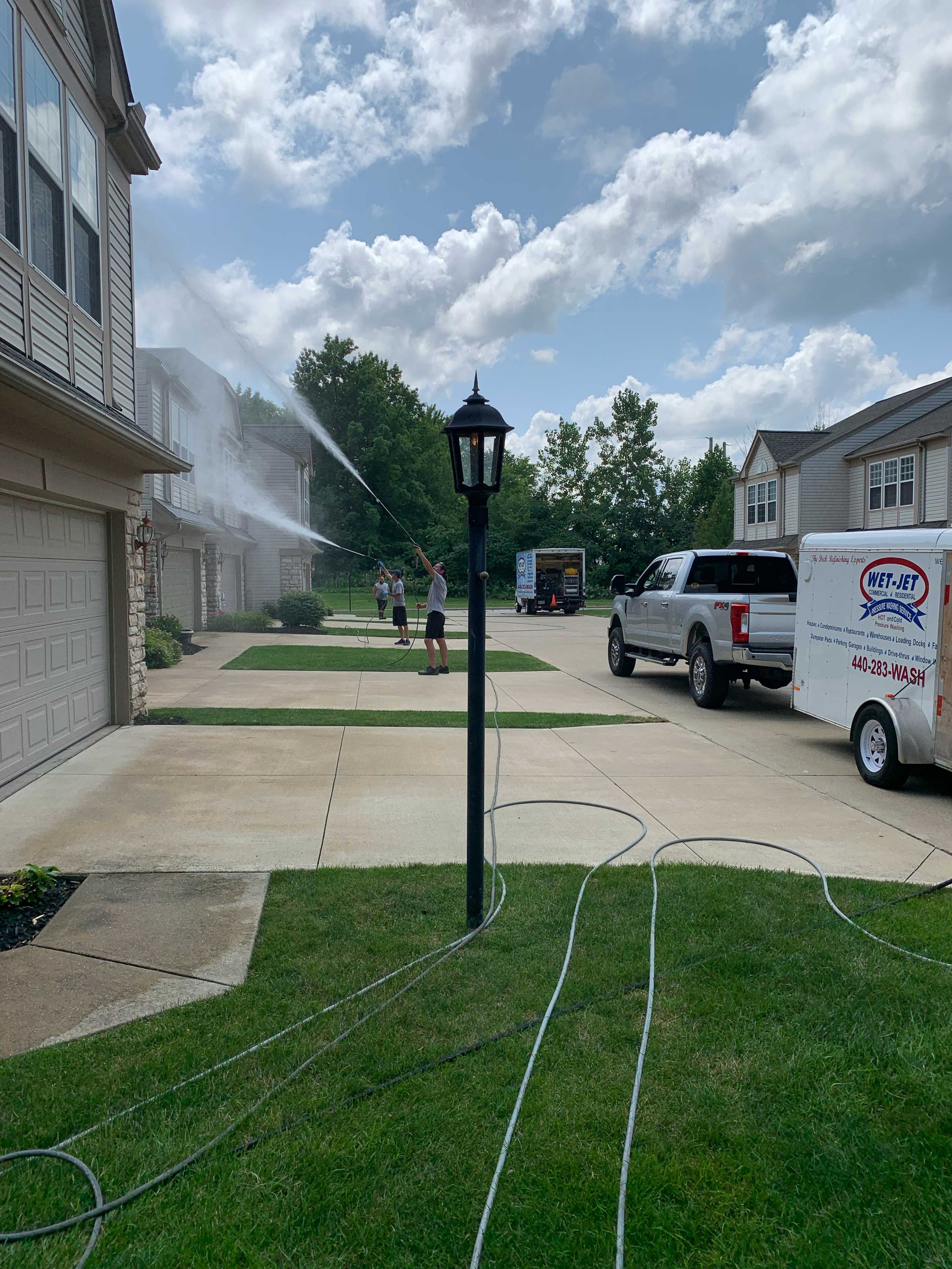
It’s a indisputable fact that your house and property are your most significant investments. In order to keep your investment healthy, regular maintenance & cleaning is necessary. Wet Jet Pressure Washing offers affordable exterior cleaning options which will help. Whether you intend on staying in your home for years to come, or plan on selling it soon, curb appeal is vital. Our trained pressure washing technicians will clean and protect your property from harmful contaminants, enhancing its curb appeal while increasing value.
Residential Cleaning Services
Because the size and details of each job changes with each surface, we cannot give prices on this site. Please call today for your free estimate or check out what specials we are currently running!
Read Our Amazing Reviews!
Contact us.
F.A.Q.
-
Pressure washing uses a pump-driven jet of water — typically 1,300 to 3,500 PSI for residential work — to lift dirt, mildew, algae, pollen, and oxidation off exterior surfaces. The high-velocity stream does the mechanical work that scrubbing can't, and a biodegradable detergent is often added to break down organic growth before the rinse. The result is a deeper, longer-lasting clean than a garden hose can produce.
-
Don't pressure wash asphalt shingle roofs, old mortar or weathered brick, painted wood, stained or warped wood, electrical panels and meters, AC condenser fins, light fixtures, windows, vehicles, or anything with lead-based paint. These surfaces need either soft washing (low-pressure detergent application) or hand cleaning. A reputable contractor will tell you when soft washing is the right call — that's a big part of why hiring a pro matters.
-
Rough rule of thumb: wood decks 500–1,200 PSI, vinyl/fiber-cement siding 1,300–2,000 PSI, vehicles 1,200–1,900 PSI, brick (newer mortar) 2,000–2,500 PSI, concrete driveways and patios 2,500–3,500 PSI (with a surface cleaner). Always start lower and work up, and use a wider 25° or 40° fan tip for cleaning — never the 0° red tip on any home surface. Pros pair PSI with the right nozzle, distance, and detergent, which is what prevents the "wand stripes" you sometimes see on DIY jobs.
-
DIY can make sense for a small concrete pad if you already own a 2,000+ PSI machine. For full-home cleaning, decks, roofs, two-story houses, or anything involving a ladder, hire a pro. Renting equipment averages $90/day plus detergent and gas, and a typical DIY whole-home job takes a full weekend versus 1–3 hours for a crew. The bigger reason: improper PSI, nozzle, or technique can etch concrete, strip stain off wood, force water behind siding, or void roof warranties — repairs that cost far more than the original quote.
-
Soft washing applies a biodegradable cleaning solution at very low pressure (under 300 PSI) to kill algae, mold, and mildew at the source, then rinses gently. Pressure washing uses high-pressure water (1,300+ PSI) to blast dirt off harder surfaces. Soft washing is the right call for roofs, vinyl siding, stucco, painted wood, and screens. Pressure washing is for concrete, hardscape, brick, and unsealed wood. Most professional jobs use both — soft wash on the house, pressure wash on the flatwork.
-
Yes — industry standard is to connect to your outdoor spigot. A residential machine pulls 3–5 gallons per minute, so a typical whole-home job uses 300–600 gallons total. On Northeast Ohio water rates, that's usually $2–$6 added to your bill — far less than the equivalent garden-hose cleaning. Our trucks carry their own gas-powered equipment, so we don't need access to your electricity.
-
Yes, when done right. We use biodegradable, plant-safe detergents (typically sodium hypochlorite blends and surfactants that break down within hours), pre-wet landscaping so plants absorb water instead of cleaner, tarp sensitive beds, and rinse foliage thoroughly afterward. Pets and pet bowls should be inside during the job and for an hour after. Pressure washing actually uses up to 75% less water than equivalent garden-hose cleaning, and we follow EPA-aligned runoff practices to keep wash water out of storm drains.
-
Yes — indirectly. The National Association of Realtors and multiple curb-appeal studies link a clean exterior to roughly 5–11% higher perceived home value and faster sale times, with NAR estimating pressure washing can add $10K–$15K to a sale price. It doesn't change your appraised number, but it strongly shapes buyer first impressions, listing photos, and showing-day reactions. ROI on a $400 pre-listing wash is consistently one of the highest of any exterior update.
-
Late April through early November, with daytime temps consistently above 40°F. In Northeast Ohio, spring (May–June) is peak demand — winter road salt, pollen, and freeze-thaw grime have built up — and early fall (September–October) is the second window, clearing leaves, mildew, and summer algae before the freeze. Avoid pressure washing in active rain or below-freezing temps; cleaners need time to dwell and surfaces need to drain before the next freeze cycle.