
Concrete Cleaning & Sealing

Expert Concrete Cleaning & Sealing
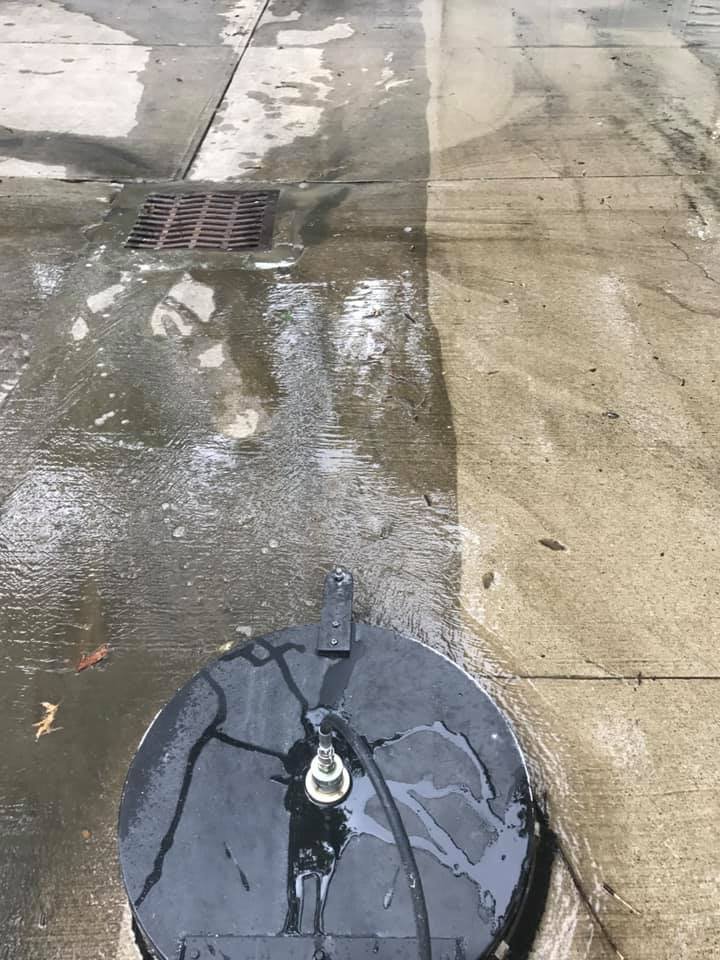
Cleaning and sealing your home’s exterior concrete will prevent its colors from fading, enhance its beauty and protect against the harsh environment. It also makes cleaning easier, lowers the price of maintenance and extends the lifetime of your concrete. Our customers have the peace of mind and expectation that we will provide excellence in concrete cleaning services. We use non-toxic & biodegradable cleaning products which will not harm our customers, their families, or their pets. Our cleaning process is superior and utilizes the most effective practices for cleaning and caring for exterior concrete.
Residential Cleaning Services
Because the size and details of each job changes with each surface, we cannot give prices on this site. Please call today for your free estimate or check out what specials we are currently running!
Read Our Amazing Reviews!
Contact us.
F.A.Q.
-
Every 2–3 years for most driveways; up to 5 years with a high-quality penetrating sealer; sooner (annually–18 months) if exposed to road salt or heavy traffic.
-
Bundled cleaning + sealing typically runs $1–$3/sq ft; a 2-car driveway commonly lands $575–$1,700. Prices vary with surface condition, sealer type, and prep work — Wet Jet quotes free.
-
Never! We provide a free estimate for all jobs and services that we offer.
-
1–3 years for acrylic, 3–5 years for siloxane/silane penetrating sealers, 5–10 years for epoxy/urethane. Northeast Ohio freeze-thaw and road salt push reapplication toward the shorter end.
-
24–48 hours in dry, sunny weather; 48–72 hours if humidity is above 70%. The slab should feel bone-dry and slightly chalky. Sealing damp concrete causes hazing, peeling, and adhesion failure.
-
Cleaning removes what's on the surface (dirt, mildew, oil, algae); sealing adds an invisible protective layer that resists water, salt, and stains. They work as a pair — sealer can't bond properly to dirty concrete, so we always clean first, let it dry, then seal.
-
Penetrating sealers leave color essentially unchanged. Solvent-based film sealers deepen color and add a wet/glossy look (often desirable on stamped or decorative concrete). Water-based acrylics fall in between. We'll show you a test patch before sealing the whole surface.
-
Late spring through early fall, with daytime temps consistently 50–85°F and no rain in the 24–48 hours after sealing. In Northeast Ohio, May–June and September are ideal — warm enough to cure properly, before/after the worst summer storms.
-
A sodium hypochlorite ("soft wash") solution kills the organism at the root, not just the surface. We apply it, let it dwell, then rinse — this is more effective and gentler than blasting it off with high pressure, which often returns within weeks.
-
A breathable penetrating sealer (silane/siloxane) significantly reduces — but doesn't eliminate — salt and freeze-thaw damage by limiting how much chloride solution gets into the slab. Film-forming sealers can actually trap moisture and accelerate spalling, which is why we don't recommend them for driveways exposed to road salt.